Beschrijving
An empirically based critique of realism
Reconstructing Realpolitik assesses what there is of value in the realpolitik approach to understanding world politics, what must be amended or discarded, and what might be needed to replace the classic model. Calling realpolitik, or realism, a “cluster of models, assumptions, hunches, hypotheses, and parameter estimates” united only by their common focus on power, the editors challenged their contributors to test elements of the realpolitik model with empirical evidence and to suggest how the model might be revised to make it square with the evidence. The result is a wealth of original, rigorously tested, data-based findings that advance our understanding of this basic paradigm. The coverage is unusually comprehensive: chapters address the onset, escalation, and expansion phases of conflict; different conflict phenomena, such as economic sanctions, interventions, crisis bargaining, and decolonization, besides the more traditional concerns of military disputes, are examined; and the cases represent a variety of different spatial and temporal domains. In the end, Reconstructing Realpolitik shows that realpolitik factors and insights help to explain and predict a variety of international conflict phenomena while at the same time offen producing incorrect or exaggerated results. While realism remains a valuable proposition, it is clear that it fails to encompass several key factors that influence state behavior. Contributors include Robert A. Baumann, Bruce Bueno de Mesaquita, Gary Goertz, Athanasios Hristoulas, Paul Huth, Patrick James, Daniel M. Jones, Charles W. Kegley, Jr., David Lalman, Russell J. Leng, Frederic S. Pearson, Jeffrey J. Pickering, Brian M. Pollins, and Gregory A. Raymond.
Populaire zoekopdrachten
Snel naar
Trending now
How to Build a Car: The Autobiography of the World’s Greatest Formula 1 Designer
Newey, Adrian

The Science of Animals: Inside their Secret World
DK || Chris Packham

The Rolling Stones All the Songs Expanded Edition: The Story Behind Every Track
Jean-Michel Guesdon || Philippe Margotin

Ride: Cycle the World
DK Travel
Aanbevolen

M. Garand
€ 22,50
Newey, Adrian
€ 28,80

Danièle Bott
€ 32,40

Hachisu, Nancy Singleton
€ 40,50
James Hoffmann
€ 25,20

Annie Griffiths
€ 30,60
Jean-Michel Guesdon || Philippe Margotin
€ 37,80

Collins Maps
€ 34,20

Jacques Cavallier-Belletrud || Lionel Paillès || Aurore de la Morinerie
€ 130,50
DK Travel
€ 20,70
Serie & gerelateerd

Zheng, Lily
Reconstructing DEI: A Practitioner's Workbook
€ 32,88
Basile, Pierfrancesco
Whitehead's Metaphysics of Power: Reconstructing Modern Philosophy
€ 37,79

Scannell
Book of Yeshua: Chronicle of Our Spirit, Vol iii
€ 18,84

R P Davis
Legendary Locations: An Anthology of Exciting Places
€ 40,33

R P Davis
GM's Toolbox
€ 46,91

Sandra S Kerns
Reconstructing Roman
€ 22,90
Giulio Cimini || Rossana Mastrandrea || Tiziano Squartini
Reconstructing Networks
€ 34,57
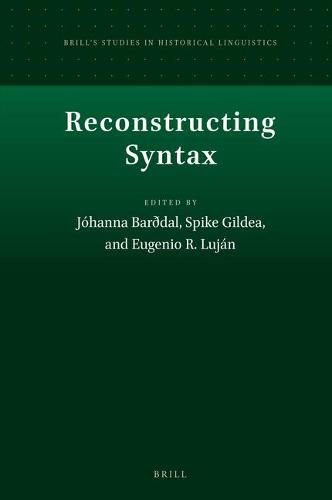
Jóhanna Barðdal || Spike Gildea || Eugenio R. Lujan
Reconstructing Syntax
€ 214,19

Hamid Ali || Syed Yasir Ali Kazmi
Reconstructing Fertility
€ 69,85
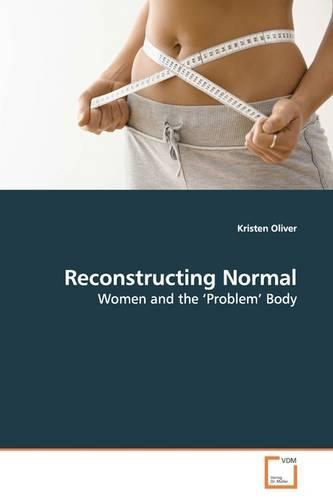
Kristen Oliver
Reconstructing Normal
€ 69,85